

THE COWBOY WAY - A CODE TO LIVE BY!
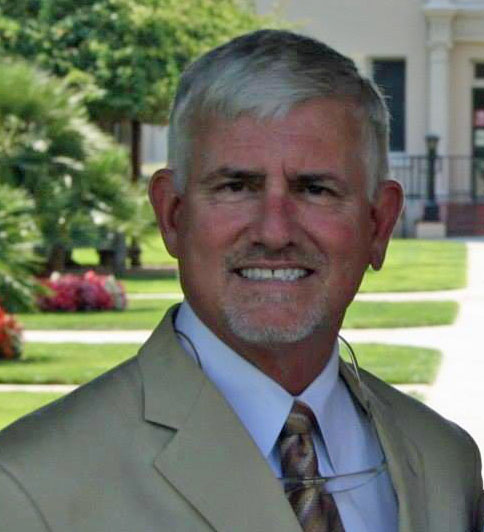
This past weekend I spent some time with a former banker and good friend Gary Wright at his cattle ranch in Durant Oklahoma. I have more to say about Gary Wright in Reflections but talked about several of the cowboy friends he and I have known over the years and how important the Cowboy Code has meant to our lives. We visited the Cowboy Hall of Fame and Museum in Oklahoma City and had several friends who found their way into the Hall of Fame. A very prominent part of the Hall of Fame was the Cowboy Code. While I am not a true cowboy, there is so much to learn from those who are true cowboys. Over the years, I had the opportunity to be around a lot of cowboys -- some of whom were true cowboys and some of whom were “wanna be” cowboys. Through these interactions I learned the “cowboy way.”
After my visit to Oklahoma, I came back home to reread one of my favorite books, Cowboy Ethics – What Wall Street Can Learn from the Code of the West, by James P. Owen. Like all good things, the time comes to revisit what matters and refresh the lessons that can be learned. This is true in today’s world, since I think we have many cowboys shaking their head about what is going on with the nation and the world. We really need some cowboys who live the “cowboy way” to lead not just our country but also our businesses.
We have all dreamed about old westerns, where the cowboy hero makes everything right, then rides off into the sunset. The best cowboys had civility and respect -– something that doesn’t appear that often in today’s world. Maybe my comment on civility remains connected to the number of news articles we read (or is it fake news?), where what should be dialogue is more like a shootout at the OK Corral -- lots of positioning and lots of gunfire, but did anyone do the right thing? There remains quite a bit of undignified behavior by many people, not just the media and politicians, but also bankers, customers, regulators, and professionals, just to start the list. Maybe we need to go back in time to when rules meant rules, ethics were followed, and life was much simpler, maybe a time where a sound bite or X (Twitter) did not exist. Most cowboys I have met are slow on the speech, thinking first before talking. Not a bad thing. Maybe being referred to as a “cowboy” is not all that bad. For a bank, including the board, management, staff, professionals, customers, and the regulators, maybe the “cowboy way” can lead us all to a better place. The prominent piece of Human Capital Banking, something that we have written about extensively for over two decades and something that we are helping banks achieve, is core values that make a difference and are driven throughout the banking franchise.
The basic principle of Owen’s book is, “What would it mean today if a handshake was good enough to seal a deal?” A man’s word was his bond, and right and wrong were clear. My father would remind bankers of a time when one really knew their customers, and a bank did not need a one-hundred-page agreement in legalese to protect the bank. While those days are long gone, it does not necessarily mean that the lessons of those days are still not valuable. Too often, boards and managements lose sight of their moral compass and of what really is important to their bank and the community where their bank operates. If a board and management operate with a set of core values that are meaningful and appropriate, then, most likely, the performance of their bank and those who touch their bank will improve and be uplifted. In our Human Capital Banking series and Directors’ Compass we have identified over 20 core values that could apply to a banking franchise and which can drive performance. This is not a new topic for the Directors’ Compass. We have been writing about this topic for several years, and the concept of loyalty, courage, and honor are the bases upon which the Findley Companies operate, both professionally and personally.
The next two issues of Reflections, in the Directors’ Compass, we will revisit the ten principles of the “Code of the West” as Owen sees it and how these ten principles can be applied to your bank. We encourage all to purchase Owen’s book and to also listen to Owen speak about what we consider such an important and valuable topic for the future of business and banking. Owen sets the foundation for his book through his love of the West. “The West is a place where the fence is always tight, but the gate is always open to friends and neighbors. It is a place where a man can make a tough decision without looking over his shoulder or worrying what someone else will think. A cowboy gets his strength from knowing what is right and what is wrong and being true to his beliefs. This is the essence of the ‘Code of the West’ and the true cowboy way.” I am a faux cowboy, but maybe a real cowboy at heart.
Owen’s book primarily deals with Wall Street ethics, and as we continue to move forward and make a difference, the lessons imparted as part of this book are very appropriate and should serve as a benchmark for boards and managements of community banks. Many of our community banks (not to mention the media and politicians) have been operating in a manner that would benefit from a refresher in ethics and an active debate on what really is important to a bank and its shareholders. Several years back, we focused on the lessons learned from many “Exceptional” banks, and those lessons included discipline, focus, and ethics. With too much greed, immoral behavior, and questionable ethics, the core values of a bank do matter! Integrity is so important that it should not stop at the doors of a bank, but, rather, it should be demonstrated by all of those who touch the bank. Considering the recent and ongoing dilemma involving the business and ethical challenges facing businessmen and bankers, often there is a push for more rules to govern behavior and morality. Often, the rhetoric coming from our elected or appointed officials does not make sense, and it’s a push for more rules, more regulations, and more control. One must only look at Washington, or other rules and regulations that attempt to govern behavior and make it so difficult to actually serve a banking customer or to actually do something positive. That is why there is so much interest in deregulation –- but will it happen or is it just talk and a Washington sound bite?
Owen believes the fundamental problem is that we have confused rules with principles. “Rules can always be bent, but principles cannot. I believe that where human behavior is concerned, any true, lasting change must come from within. So, if we encourage better ethical practices throughout the industry, we need something that will touch the deepest part of us, something that will make us want to do better and be better than we are. In short, what we need is not more regulation, but more inspiration.” That is right on! While many leaders have tried to make this their message by attempting to inspire and avoid overregulation, they have failed miserably. One could only wish that those responsible for delivering and enforcing the message, the regulators, would be more interested in inspiring bankers and less interested in regulating and controlling. But, at the same time, bankers need to accept inspiration no matter what the source. A major necessity exposed by the economic crisis of several years ago and remaining a challenge facing this country, is that the required change must come from within us, and the change must be to behavior and expectation. We have all lived beyond our means with the false expectation that good times will continue and that we are protected, or better yet, entitled. The government, or big brother, is not the solution to this problem, and to think that by adding more debt or more rules is the key is just plain foolish. We can’t get anyone back in Washington to agree on anything, and many see their role as arguing for change, but not really wanting change. Only individuals and businesses working together, often without governmental assistance or cooperation, is the solution, but we need the coordination of all. Maybe what we all need is just a simple set of principles to live by, and maybe the “Code of the West” is a starting point.
Live Each Day With Courage
Courage is a recurring theme for The Findley Companies when dealing with boards and management. We have long stated that courage is not the lack of fear but the ability to face the fears with an open heart, an open mind, and with dedication to the bank and those associated with the bank. Owen imparts the same concept when noting that a cowboy’s life was one of hardship, and cowboys were always facing their fears. “Real courage is being scared to death and saddling up anyway.” Bankers continue to operate in an environment with extreme challenges and fears: the fear of failure; the fear of regulators; the fear of customers; and the fear of disappointment. While we have seen some good times in the last few years, there is still fear. Unfortunately for many, the list is long and daunting; however, with these fears comes the necessity of moving forward. We can deal with fear through knowledge and by assembling directors, bankers, and professionals who share values and who can make decisions and live with the consequences of such decisions. Courage starts from within and includes the confidence to stand behind your beliefs. Courage is voicing your opinion when something isn’t right, even when it means going against your partners, friends, and colleagues. Courage is within all of us, and it starts with the concept of having the courage to do the right thing, not just what you think is the right thing for yourself, but rather, what is the right thing for the bank and all those who are connected to the bank. This is an everyday task, and the focus needs to be on the courage to make the right choice and do the right thing.
Take Pride In Your Work
Owen emphasizes the concept of taking pride in one’s work through a poem by Red Steagall entitled “The Fence That Me and Shorty Built.” An excerpt from the poem is as follows, “If you are not proud of what you do, you won’t amount to much. You’ll bounce around from job to job. Just slightly out of touch.” Owen’s main point is that “cowboying” does not build character, it reveals it. The attention to details in banking means something. The Findley Companies have long pushed for bankers to be educated and trained in all areas. One of the major points derived from “Exceptional” banks is that they are teaching, training, and listening to their people. When we think of the most successful community bankers, we think of those who know all sides of the business and who take pride in what they do every day. Today, we have too many specialists and do not lift the Renaissance banker who knows all areas and who has an idea of how to touch all areas of the bank. These renaissance bankers take great pride in a job well done by all people connected to their bank. Mediocre effort leads to mediocre results.
Being a consistent “Premier Performing” bank, or better yet an “Exceptional” bank, is as much tied to the element of pride as the level of exceptional service. This again is best demonstrated by leaders being exceptional in what they do and having great pride in the efforts of those around them. Everyone takes pride in the bank and serves the greater good and not the individual; however, by taking pride and doing an exceptional job, one is uplifting oneself. This again starts with the individual, and the character of the bank is reflective of the character of those who lead. Exceptional Banks are often built on the premise of reestablishing pride within the banking franchise.
Always Finish What You Start
Owen points out that cowboys hated quitters, whiners, and complainers. An individual quitting often leads to the failure of all. “When you are riding through hell … keep riding.” This is so true because what the banking industry has gone through last decade is considered hell. Hell on the individual, hell on the people associated with the bank, and hell on the bank itself. Some did not survive the journey, but quitting is not an option. What needs to be added here, once you get through hell, keep riding! We cannot stop! Sure, you can look around, but do not stop the forward movement. Too often we stop and look around. The last thing you want is for hell to catch up to you!
This element is a true reflection of character, and we know of too many bankers who gave up or are now getting ready to give up due to the challenge. That is not good enough, and a failure of effort will haunt you for the rest of your life. Now is the time to be creative. Now is the time to show courage. And now is the time to fight the good fight. The job is at hand, and it is important to remind oneself that quitting is not a personal decision, as the results of quitting will impact everyone connected with the bank. It is easier to finish when there are others who are part of the journey. A journey together is better than a journey alone, but getting the job done requires the individual drive to finish what you start.
Do What Has To Be Done
In making the point, “do what has to be done,” the basic principle is standing up for what is right and defending your bank. “The true test of a man’s honor is how much he would risk to keep it intact.” This also applies to a bank. How much is a board or management willing to risk keeping a bank’s honor intact? Not the easiest question. A few years ago, many boards were asked to dig deep into their pockets to salvage their bank or to make tough decisions. Maybe this is also a question for the regulators. How much are you willing to risk keeping your reputation intact? For a cowboy, this often was facing the greatest risk -– death. For bankers, it is the risk of enforcement action, failure, and the death of their bank. It is okay to risk the bank’s future if what is being done is the right thing. Principles matter, and, possibly, operating in an environment where ethics and principles don’t matter, may not be worth it. A great deal of advice we offer to boards and impart to the regulators is to do what is right and not get carried away with what is popular or with what others may want. Banking is not a sprint but rather a marathon. Look at how decisions that are made will play out in the future. Not every decision needs to have an immediate impact or be disclosed in a tweet or on social media. There are many things worse than death or worse than the failure of a bank. Do what is right!
Be Tough, But Be Fair
Cowboys have always been perceived as “tough as nails” and having to weather very tough elements. While a cowboy was tough, Owen points out that a cowboy was also very fair. The “Code of the West” was based on the principle of fairness. What was engrained in a cowboy was the “Golden Rule.” “The ‘Golden Rule’ was nothing less than the key to survival.” The “Golden Rule” is based on the concept of, “treat others as you would want others to treat you.” We seem to have lost this in our society! Why doesn’t that play with the media, politicians, and bankers and regulators today? We ask bankers all the time how they want to be treated in today’s environment. Those who show fairness and compassion often ride another day, but that does not downplay the element of toughness. One of the ongoing concerns is the regulators (and several younger examiners and bankers) who believe that being the tough guy or thug is a good thing. We have been around long enough to realize that what goes around comes around, and those who play the tough guy, without the aspect of fairness, will have their day. Bankers need to be tough but fair with everyone associated with the bank. No one minds toughness if there is an ability to communicate, a perception that one is being listened to, and reasoning provided for the action. Being tough but fair means providing the rationale for a decision and having the comfort of knowing that the decision was the right one.
To many, the “Golden Rule” often means, he who has the gold makes the rules; however, in the long term, those who are tough but fair and those who have ethics are truly the ones who will be in a leadership position for the long term. Being a “tough guy” is often considered short-term action that has negative long-term consequences, but being fair is always a benefit for the long term. What’s important in today’s world is not how someone looks or how they speak, but rather what they have done and what they are expected to do in the future. Deeds do matter!
In the next Reflections Director5s Compass we will explore more of the principles of the “Code of the West.” In the meantime, we all need to look within ourselves and see what matters to us personally and what matters to us as bankers. This old saying does speak volumes, “Talk is cheap -– actions are what matters.” I saw this up close with my cowboy friends. Do the actions of your bank and those who are critical to its success pay tribute to the “Cowboy Way?” Those who follow these principles make this a better place for all. This is what matters and is how to achieve Exceptional Banking status.
Gary Steven Findley
Editor


