

LEADERSHIP WHEN NEEDED THE MOST! – LEARNING FROM ABRAHAM LINCOLN
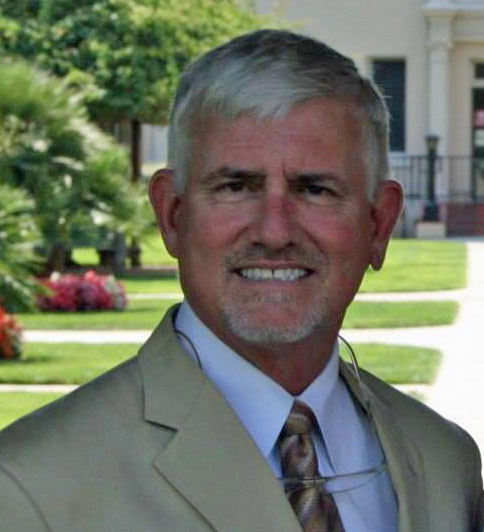
- Gary Steven Findley
- Feb 24
- 17 min read
For decades, the Directors Compass focused on the reoccurring themes of loyalty, courage, and honor and the importance of leadership. With all the noise in Washington D.C. (from all sides) and the challenges throughout the world that are facing our country, we need a new attitude toward leadership and an attempt to work together. The last several years have been a time of dissension within our country. We all recognize that in a time of turmoil, leadership is essential if we as an industry and a country are to come out of this in an acceptable condition. Several years ago, we wrote extensively on leadership, and one of the major pieces was on the leadership skills of the 16th President of the United States. As we enter the 250th year of our country, we need a refresher and maybe some reflection on what it means to lead.
In the next issue of Reflections, we begin a multi-part series looking at the leadership principles of Abraham Lincoln, based on the book, Lincoln on Leadership - Executive Strategies for Tough Times by Donald T. Phillips, published by Warner Books. We must focus on issues of leadership in a difficult time. We have all seen examples of the lack of leadership, both from a governmental as well as corporate standpoint. While several of our political and corporate leaders have not paid tribute to the words: loyalty, courage, and honor, in a difficult time, boards and managements of banks must step up to the line. Without the right form of leadership, most companies and banks will become faded memories in the next few years.
Abraham Lincoln provides leadership principles that are valuable to boards and managements for the future. Lincoln may be recognized as the last great leader before industrial change. He stood for all that was right, honest, and self-evident. As a boy, his heroes were the founding fathers, and he studied the history of that young nation that was so devoted to human rights. He grew up in poverty and had a binding link to the common people. He was innovative in a time when the age of discovery and inventions was just beginning. He was compassionate and caring, yet, when necessary, he could put his foot down firmly and be decisive beyond question. He was patient, persistent, consistent, and persuasive rather than dictatorial. But, without a doubt, the foundation of Lincoln’s leadership style was the unshakeable style of commitment to the rights of the individual.
Lincoln’s concept of human rights was included in James McGregor Burns’s book on leadership, in which he writes, “Leadership is leaders inducing followers to act for certain goals that represent the values and the motivations -- the wants and the needs, the aspirations and expectations -- of both leaders and followers, and the genius of the leadership lies in the manner in which leaders see and act on their own and their followers values and motivations.”
Phillips emphasizes that by the time Lincoln took office, seven states had seceded from the Union to form the Confederate States of America. Barely ten days before he took the oath of office on March 4, 1861, Jefferson Davis was sworn in as the President of the Confederacy in Montgomery, Alabama. President Buchanan had given up hope of holding the country together and was simply waiting for his term to expire. Buchanan left Washington, claiming that he was, “The last President of the United States.” During all this turmoil, a relatively unknown Lincoln took the oath as the nation’s sixteenth President. The first Republican President elected by a minority of the popular vote, he was a Washington outsider who was viewed widely as a second-rate country lawyer and completely ill-equipped and unable to handle the Presidency. He commanded no respect from anyone in the Nation except his most loyal supporters. Lincoln was faced with the insurmountable problem of holding the Nation together while at the same time organizing a new and effective government that could prepare for an impending civil war.
In his inaugural address, Lincoln declared that the Southern states would not be allowed to separate and that the “momentous issue of civil war” was in their hands. Lincoln wrote, “It is seventy two years since the first inauguration of a President under our national Constitution ... I now enter upon the task for the brief Constitutional term of four years under great and peculiar difficulty. A disruption of the Federal Union, heretofore only menaced, is now formidably attempted.” Such was the situation for a man that had never held an executive leadership position, who had only been a one term national congressman, who had no military experience, and who had never been in battle. He appeared unable to lead the Nation; however, over the next four years he demonstrated what true leadership is all about. Under moderate standards, Lincoln’s accomplishments are no less than a miracle. It can be no doubt that Lincoln was one of the greatest leaders in this country and perhaps that the world has yet known.
In his book, Lincoln on Leadership, Phillips breaks down the four parts of leadership, which are people, character, endeavor, and communication. Over the next two months we will look at each of these four areas of leadership. This month - - People Matter and the Importance of Character.
People Matter
Get out of the office and circulate among the troops.
During his four years as President, Lincoln spent most of his time among the troops, the generals, as well as members of Congress. He took trips to the hospitals to visit the sick and wounded, which demonstrated his compassionate and caring nature. Lincoln even went to the field to observe or take charge of several battle situations himself, coming under fire at least once. Several business writers have emphasized the leadership tool of “Managing by Wandering Around” (“MBWA”). It has been referred to by several other words, such as rolling leadership, being in touch, and getting out of the ivory tower. Basically, it means human contact. Lincoln’s basic philosophy was to see as many people as often as he possibly could. It was reported that Lincoln spent seventy-five percent of his time meeting with people. No matter how busy the President was, he always seemed to find time for those who called upon him. Lincoln would not maintain any distance between himself and the people, which meant a difficulty to guard. He frequently complained about the protection. “It is important for the people to know that I come among them without fear.” While Lincoln liked to wander around, when he could not get out of the White House, he would let people wander to him. Governmental officials, businessmen, and ordinary citizens would literally climb the walls of the executive mansion in hopes of getting in to be seen. Lincoln turned away very few visitors, and some he even encouraged to visit.
This trait of Lincoln brings up an important principle for modern leadership. When subordinates, or people in general, know they have easy access to their leader, they will tend to view the leader in a more positive and trustworthy light. It is written of Lincoln, “All who claim the personal acquaintance of Mr. Lincoln will agree that he is the very embodiment of good temper and affability. They will all concede that his kind words and encouraging smile by humorous remark for nearly all who seek his presence.”
To make timely and reliable decisions, Lincoln also needed up-to-date information. He relied on three major sources: reporters and trusted advisors, his practice of going to the field, and the modern communication technology of the age ... the telegraph. All leaders must seek and require access to reliable and up to date information. Lincoln desired key intelligence so he could make quick, timely, and effective decisions. He needed accurate information and the best way to obtain it was to go out and get it himself. For a leader, there is a certain amount of value and effect in seeing people outside their everyday business environment or out of the leader’s office. What Lincoln wanted was honest talk with people. He needed to know the truth, and he had the innate ability to perceive the truth. He could receive the information, biased by filters and prejudices, process it, and then communicate it in a common man’s vernacular so that everyone could better understand it.
Phillips emphasizes some basic principles: that it is important to know that you let the people come to you without fear. Boards and management should not decline to see people who call on them. Set a good example. You must see and require access to valuable, up to date information.
Build strong alliances.
Lincoln stated, “A house divided against itself cannot stand ... our cause must be entrusted to and conducted by its own undoubted friends - whose hands are free - whose hearts are in the work - who do care for the result.” Lincoln gained the trust and respect of his subordinates, building strong alliances, both on personal and professional levels. Phillips states that Lincoln wanted to know how those people would respond in any situation, who would have the tendency to get the job done his way or likely to procrastinate and delay, who can be counted on in an emergency, and who were the bright, more able, more committed people who shared his strong sense of ethics and values. He also wanted his subordinates to get to know him so that they would know how he would respond in any given situation, and what he wanted, demanded, and needed. If they knew what he would do, they could make their own decision without asking him for direction, therefore avoiding delay and inactivity.
Lincoln gained commitment and respect from the people because he was willing to take time out of his busy schedule to hear what his people had to say. It is no different than running a business. By staying in touch with the people who comprise the foundation, you are more likely to gain an advantage that helps you to win in the war against stiff competition. It’s the people who are closest to the consumer and the product who know how to win, and almost always they will want to offer their ideas. We remind boards and managements, on strategic planning, that effective implementation requires input from all within the institution - - that includes on-the-line personnel.
In building alliances, Lincoln’s actions teach the following principle: spend time letting your followers learn that you are firm as well as equally committed to the daily performance of your duty. Doing so will gain respect and trust. Invest time and money in better understanding the ins and outs of human nature. Showing that you are compassionate and have a caring nature will aid you in achieving successful relationships.
Persuade rather than coerce.
“With public sentiment nothing can fail. Without it nothing can succeed. Consequently, he who molds public sentiment goes deeper than he who enacts statutes or pronounces decisions.” Lincoln strived to work with and through people, while at the same time always driving to achieve his own main objective, which was the preservation of the federal government. He was poised and confident under pressure, and he influenced others with his friendly manner, openness, and verbal skills. Lincoln was not the dictator the unfriendly press labeled him. Though he was decisive, especially in his expansion of executive authority, he almost always rejected coercion as a means of attaining what he desired. When
a leader begins to coerce his followers, he is essentially banning leadership and embracing dictatorship. Lincoln rejected the dictatorial style by becoming a persuader, by delegating, and by his subsistence style of philosophy.
On the aspect of persuasion, Lincoln wrote, “When the conduct of man is designed to be influenced, persuasion, kind, unassuming persuasion should never be adopted. It is an old and true maxim that a drop of honey catches more flies than a gallon of gall. So with men. If you win a man to your cause, convince him that you are his friend. Therein, that is a drop of honey that catches his heart, which, say what he will, is the great high road to his reason, and which, when one is gained, you will find little trouble in convincing his judgment of the justice for your cause.” Dictatorship forced coercion - - all characteristics of tyrants, despots, and oppressors violated the rights of the basic individual, to which he was so committed, and upon which the Nation was founded. All violated a sense of basic decency ... the concept of a gentleman, a peacemaker. Lincoln learned and mastered the art of persuasion in his early career. He wrote several speeches and letters on the concepts of persuasion. In his days at the White House, Lincoln attempted to gain commitment from individuals through openness, empowerment, and coaching. He provided as much support, both morally and monetarily, as he possibly could. He told his cabinet members that, “If questions effect the whole country, there should be full and frequent consultations, and nothing should be done particularly effective in any department without consultation with the head of that department.”
Leadership often follows parenting, which aided Lincoln in his position of President. An organization is the family. The leader is the head of the family. Consequently, leaders often nurture and guide subordinates as much as parents do children. On the issue of persuasion rather than coercion, we learned from Lincoln that one should discourage formal grievances, persuade your subordinates to compromise whenever they can, and seek the consent of followers to lead them. If you practice dictatorial leadership, you prepare yourself to be dictated. Delegate responsibility and authority by empowering people to act on their own. On issues that affect your entire organization, conduct full and frequent consultations with the heads of your various departments. A good leader avoids issuing orders, preferring to request, imply, or make suggestions.
One of the important elements learned from evaluating Lincoln is that a leader is a gentleman and a peacemaker. One of the best descriptions of what a gentleman should be (also a description of what a leader should be) was written by Robert E. Lee, the Confederate General. General Lee wrote “The forbearing use of power does not only form the touchstone but the manner in which an individual enjoys certain advantages over others is the test of a true gentleman. The power which the strong has over the weak, the magistrate over the citizen, the employer over the employee, the educated over the unlettered, the experienced over the confiding, even the clever over the silly - the forbearing or an offensive use of all of this power or authority or the total absence of it when a case admits it, will show the gentleman in plain light. The gentleman does not needlessly or unnecessarily remind an offender of a wrong he may have committed against him. He cannot only forgive, he can forget and he strives for the noblest of self and mildness of character which imparts sufficient strength to let the past be the past. The true gentleman no longer feels humbled himself when he cannot humble others.” This is a great description of Lincoln and should be a quality that we should all strive for in pursing leadership.
The Importance of Character
In discussing Lincoln, the terms most utilized are honesty and character.
Honesty and integrity are the best policies.
Lincoln’s reputation for honesty and integrity, although challenged over the years, has remained unblemished. In fact, as more knowledge is gained about Lincoln, it is largely enhanced. Without question, honesty is one of the major qualities that made him a great leader. The architecture of leadership, all the theories and guidelines, fall apart without honesty and integrity. It is the keystone that holds an organization together. At the same time, integrity must be sincere. That is one reason Lincoln was so admired in his lifetime. From an individual’s words, deeds, and actions, integrity can be judged genuinely, and integrity is tied closely to the values espoused by an effective leader. As a rule, leaders must set and respond to fundamental values that move their followers. In addition to much needed moral standards, values tend to be motives by which subordinates act and react. Possession and preaching of wide range, appealing goals and values will result in broad support from the masses. People will be involved participants in a shared group effort. Put more simply, values motivate.
Lincoln constantly shared, stressed, and emphasized the most fundamental values that over the years have mobilized Americans to the pursuit of liberty and quality. His integrity was, in short, the nation’s integrity. Lincoln stated, “I have never had a feeling, politically, that did not strike from the sentiments embodied in the Declaration of Independence.” All men were created equal in Lincoln’s eyes, and the nation was formed by the founding fathers so that any tyrant who might, “reappear in this fair land and commence their vocation ... should find left for them at least one hard nut to crack.” The Civil War was not just another conflict of arms for Lincoln, but rather a people’s contest. “On the side of the Union,” he said, it was “a struggle for maintaining in the world that form and substance of government whose leading objective is to elevate the condition of men ... to afford all unfettered a start and a fair chance in the race of life.”
Lincoln basically appealed to everyone’s basic sense of decency and integrity. Lincoln also practiced what he preached. Lincoln would help others claim success with patience, trust, and respect. Indeed, on his own, Lincoln was what was referred to as a sharing leader; one of those leaders who perceive their role as shaping their future to the advantage of groups with which they identify, an advantage defined in terms of the broadest goals and the highest possible levels of morality. Trust, honesty, and integrity are exceedingly important qualities because they so strongly affect followers. Most individuals need to trust others, especially their boss. Subordinates must perceive their leaders as consistently fair persons if they are to engage in the kind of innovative risk-taking that brings a company rewards. Lincoln knew that he had his detractors but dealt with them by maintaining his integrity and honesty. Those who questioned his upbringing and education and his political affiliations tended not to doubt his integrity. Lincoln showed the same degree of fairness and decency, whether disciplining or congratulating his subordinates. Emulating this style will earn leaders the trust and respect that ultimately fosters passion and commitment.
On the aspects of honesty and integrity, Phillips emphasizes giving subordinates a fair chance with equal freedom and opportunity for success. You must set and respond to fundamental goals and values that move your followers. You must constantly be fair and decent, both in the business and the personal side of life. It is your duty to advance the aims of the organization and also to help those who serve it. If you forfeit the confidence of your fellow citizens, you can never again regain respect.
Never act out of vengeance or spite.
“I shall do nothing in malice. What I deal with is too vast for malicious dealing.” Lincoln recognized that followers of virtually every organization respond better to a leader that consistently displays cognizance and empathy than one who is associated with vindictiveness or animosity. Lincoln believed that actively engaging in slandering and malicious dealings would simply eat up far too much of his time, which he used to secure positive end results rather than negative ones. Pettiness, spite, and vengeance were considered to be beneath the dignity of a leader. Followers expect leaders to rise above such demeaning and degrading activity. Lincoln understood that if people were going to come to him with ideas, suggestions, and better ways of making things work, he had to provide an open environment. He actively encouraged innovative thinking and the participation of subordinates. Boards and managements should be able to learn from Lincoln that by being able to be compassionate and kind, rather than malicious or vengeful, they will make fewer enemies for themselves and their organization and will thereby create more supporters or “soldiers” to the overall corporate mission.
Lincoln teaches us that if leaders are petty, the subordinates will be petty. If leaders are encouraging, optimistic, courageous, and courteous, then most of the workers in the organization will be as well. Lincoln wrote, “Malice toward none and charity for all; with firmness in the right as God gives us to see the right, let us strive on to finish the work that we are in, to bind up the nation’s wounds, to care for him who shall have borne the battle and for his widow and his orphan, to do all which may achieve a just and lasting peace among ourselves, and with all nations.” The lack of malice on the part of a leader and genuine caring inspire trust among subordinates and fosters innovative thinking. They also keep followers from being terrified, allowing them to be themselves.
Phillips emphasizes to never crush a man out, thereby making him and his friend’s permanent enemies of the organization. No purpose is served by punishing merely for punishment’s sake. Your organization will take on the personality of its top leaders. Have malice towards none and charity to all. Touch people with the better angles of your nature.
Have the courage to handle unjust criticism.
“Never let us be slandered from our duty by false accusations against us, nor frightened from it by menaces of destruction to the government, nor of dudgeons to ourselves. Let us have faith that right makes might, and in that faith let us then dare to do our duty as we understand it.” Lincoln displayed an amazing amount of courage over an extended period. He had several setbacks, only to overcome them all and persistently endure until obtaining the final victory. Through it all, Lincoln was the risk taker, assuming the bold stand and not wavering in the process. He had faith and confidence in himself.
He did not need ego gratification or constant reinforcement to know that his course of action was proper. Lincoln was slandered, libeled, and hated perhaps more intensely than any man ever to run for the nation’s highest office. He won the election partially because the Democratic party was hopelessly split, having nominated two candidates. Lincoln was the first President elected from the Republican party, which was well unified with a strong support base in the East. However, Lincoln’s name was not even on the ballot in the Southern states. Lincoln was publicly called just about every name imaginable by the press of the day, including a grotesque baboon, a third rate country lawyer who once split rails and
now splits the Union, a coarse vulgar joker, a dictator, an ape, a buffoon, and others; one publication labeled him, “The craftiest and most dishonest politician to ever disgrace the public office of America.” However, Lincoln, before his inauguration, wrote, “I have reached the city of Washington under circumstances considerably differing from those under which any other man has ever reached it. I have reached it for the purpose of taking an official position amongst the people, almost all of whom were opposed to me, and are yet opposed to me as I suppose.” Severe and unjust criticism did not subside after Lincoln took the oath of office. No matter what he did, Lincoln understood that there were going to be people who were not going to be pleased.
Throughout much of his life, Lincoln was the object of jealousy, enmity, and malice. This was largely a result of his burning desire for achievement, which motivated him to excel. Time and maturity aided him in dealing with such criticisms later in his life that he never forgot the feelings that he experienced. As a result, he gave care and compassion to others, who were subject to the same treatment. Boards and managements might find it interesting and helpful to explore Lincoln’s methods in hearing, dealing with and overcoming unjust criticism. Lincoln handled such defamation in several ways. Most often, he would simply ignore the attacks. This is particularly true of the times during political campaigns. Most of the slander was petty and utterly ridiculous in nature. However, on some occasions, Lincoln would stand up and defend himself to any of his attackers, especially if false accusations were damaging to the public’s view of his principles. Lincoln remarked once, “I have found that it is not entirely safe when one is misrepresented under his very nose to allow the misrepresentation to go on uncontradicted.”
Boards and managements can learn from Lincoln that you must have stamina, fortitude, and self confidence. You must believe in yourself, but, in addition, a certain style and routine must be developed in dealing with harsh criticism. Every leader will encounter such slander simply by virtue of the position held. It is how you allow it to affect you that makes the difference in your success.
Phillips emphasizes the principles of courage for unjust criticism. Don’t be terrified by an excited populace and hindered from speaking your honest sentiments. It is not entirely safe to allow misrepresentation to go uncontradicted. Remember the truth is generally the best vindication against slander. Do the very best you know how, the very best you can and keep doing so until the end. If you yield to even one false charge, you may open yourself to other unjust attacks. The probability that you may fail in the struggle is not to deter you from the support or cause you believe to be unjust.
Character is an important part of leadership. Lincoln demonstrated character throughout his life and that boards and managements of banks must recognize the difference between “Premier Performance” and mere performance.
The true test of leadership is in a time of crisis and division. Lincoln showed his leadership qualities best at a time of crisis. We know our leaders will be tested. Those who possess the leadership will survive; those who do not will crumble. We also hope that they look back and learn from Lincoln regarding his character and integrity -– they do matter! Next month we will focus on the issues of endeavor and communication. Let’s learn from the past as we guide our future.
-Gary Steven Findley, Editor


